Travel Essay · July 4, 2026
The Holy Land As I Experienced It
By Rachael Pereira
There are two powers in the world, the sword and the mind. In the long run the sword is always beaten by the mind. — Napoleon
Paul had accepted a job in one of the most feared places in the world, and I was moving there with my fifteen-year-old son. I looked up Palestine on the internet and could not even settle whether it was a country — it appeared to have its own political parties, yet it was declared neither country nor state. Every article conflicted with the next. The politics, religion, race, and wars of the holy lands were overwhelming, and with all the information available to me one thing stayed consistent: it seemed to be a dangerous place.
The perception the media painted — a land controlled by and full of terrorists — and the fact that the topic was so fiercely controversial interested me greatly. This is a place where endless history has taken place and continues to. Many races and religions call it holy. It has earned its badge as one of the most unsettled territories on earth. So the question I carried with me was simple: is Palestine unjustifiably dangerous, as the media purports it to be — or is it a place that is immensely misunderstood?
The crossing
In January 2006, en route to Ramallah, we arrived in Amman, Jordan — via London, via Trinidad. The air was far colder than I expected of the Middle East, and after twenty-four hours awake we still had a long way to go, the rest by car. The drive through Jordan was beautiful and peaceful countryside, lush and green, turning barren and serious as we approached the border.
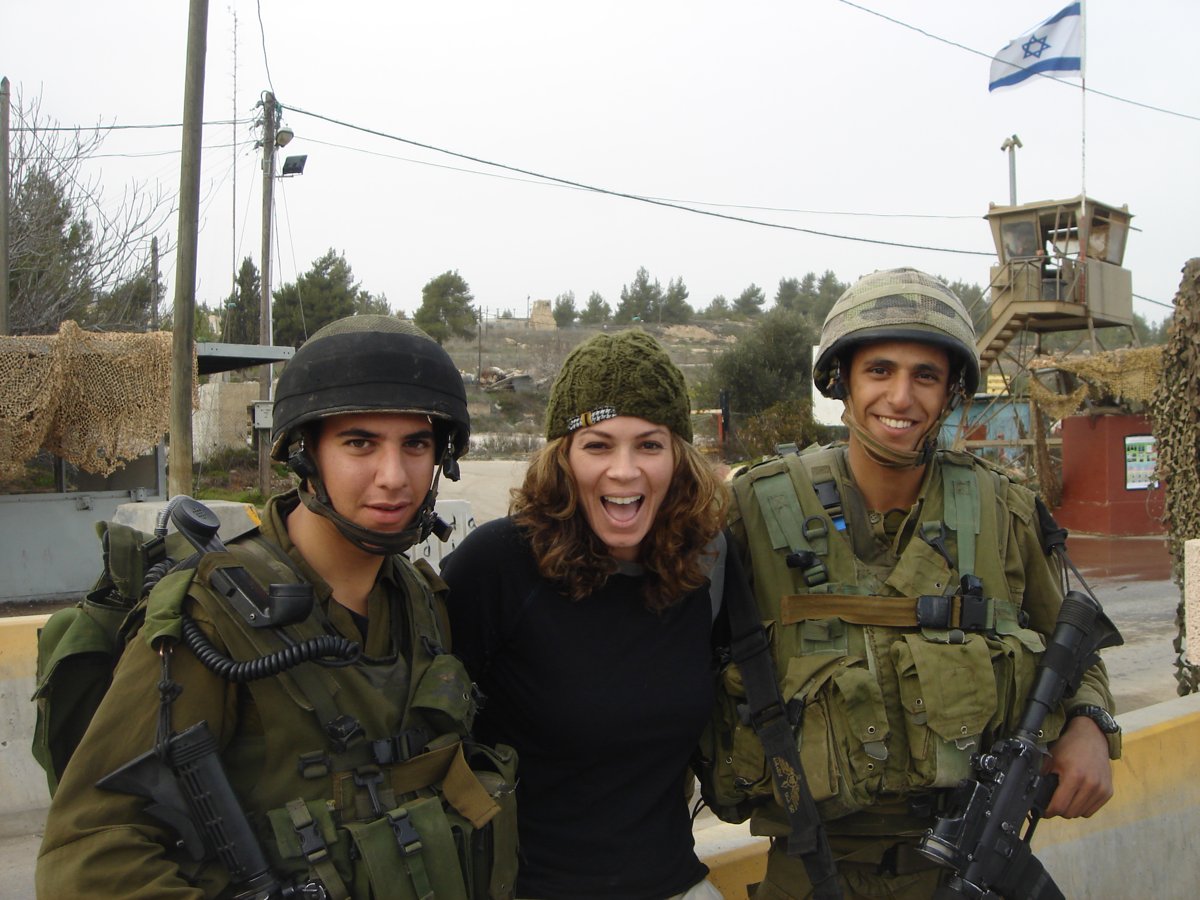
The entrance at the border of Israel had intense, heightened security. Amazingly young guards — not much older than my son — stood heavily armed, machine guns and grenades visible on their belts. Our luggage went through an electronic machine at the side of a large truck in the middle of the road, dropped off the conveyor into the dust, and we bumped our disheveled suitcases along the uneven road to the next car. We changed cars and repeated the process at least three more times before we entered. I realized later that this — with a company driver waiting at the end of each checkpoint — was the VIP treatment.
What I learned by living there
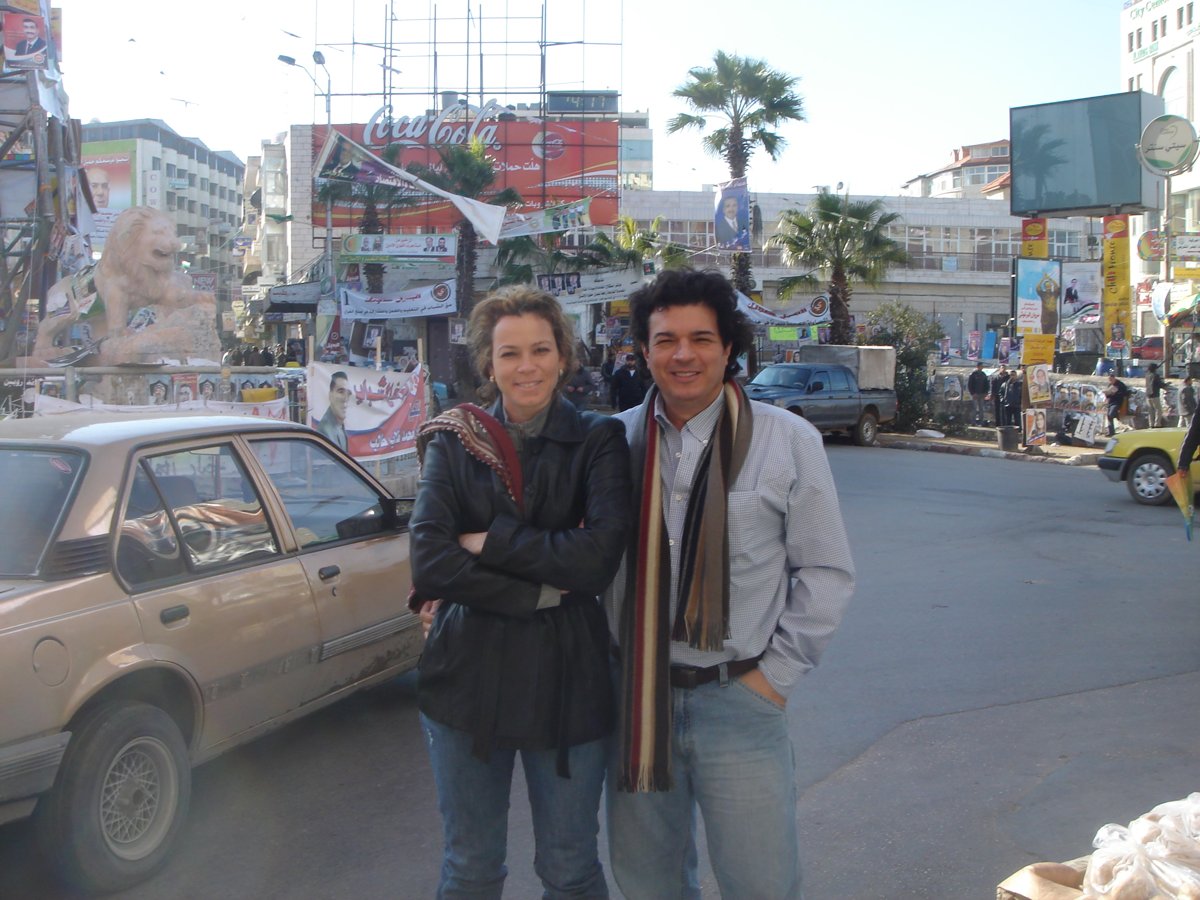
Israel, I was surprised to learn, is a mixture of Jewish and Palestinian territories, and the borders and checkpoints dividing them are controlled by one side only. Long lines that I first took for some special event turned out to be ordinary Palestinians, commuting between their own towns, waiting to cross.
I went in expecting to find what television had prepared me for. What I found instead were neighbors, markets, schoolchildren, and a people navigating an impossible daily geography with patience I have never seen matched. Not many people get out of the car at a border to take a picture — I had to have one. The soldiers, I noted in my journal that day, are not dressed for fashion.
I left the Holy Land with fewer certainties than I arrived with, and I consider that the point. The sword is loud. The mind — Napoleon was right — wins in the long run. Understanding a place means standing in it.
Adapted from my essay published in 2006.
Syndicated via RSS to X · Facebook · Instagram